


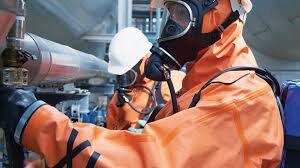
Survive and Work Safely in H2S Environments. Your Essential Ticket to the Oilfield.
Hydrogen Sulfide (H2S) is a deadly gas common in oil and gas operations. This intensive, practical course provides the critical knowledge and skills to recognize, assess, and respond to H2S hazards. You will learn to use detection equipment and emergency breathing apparatus, making you compliant with industry standards for working in potentially hazardous areas.
-
Course Format: Practical, hands-on training with live equipment drills.
-
Total Duration: 8 Hours (1 Full Day).
-
Prerequisites: None. Mandatory for all oil & gas site personnel.
-
Certification: H2S Alive Certificate from Gulf Skill Education System (Aligned with international oil & gas safety standards).
What You Will Learn (Course Objectives)
By the end of this course, you will be able to:
-
Identify the physical properties and sources of Hydrogen Sulfide (H2S).
-
Recognize the health effects and exposure limits (TLV, STEL, IDLH).
-
Properly use and interpret portable and fixed H2S detection equipment.
-
Don, activate, and safely work using an Emergency Escape Breathing Apparatus (EEBA/SCBA).
-
Execute the correct emergency response procedures for an H2S release (alarm recognition, muster, rescue principles).
Detailed Course Syllabus
Morning Session (Theory & Knowledge – 4 Hours)
-
Module 1: Introduction to H2S
Properties of H2S (“rotten egg” smell, heavier than air), common industries and worksites where it is found. -
Module 2: Health Hazards & Toxicology
Effects of exposure (eye irritation, olfactory fatigue, respiratory distress, death). Understanding PPM, TWA, STEL, and IDLH. -
Module 3: Detection & Monitoring
Types of detection equipment: personal wearable monitors, portable gas detectors, and fixed area monitors. How to interpret readings and perform a “bump test.”
Afternoon Session (Practical Skills & Response – 4 Hours)
-
Module 4: Respiratory Protective Equipment (RPE)
Types of respirators. Hands-on Drill: Correct donning, checking, and doffing of an Emergency Escape Breathing Apparatus (EEBA/SCBA). Practical work simulation while wearing the apparatus. -
Module 5: Emergency Response & Rescue
Site alarm recognition, emergency muster procedures, roles and responsibilities. Scenario-based Drill: Responding to a simulated H2S alarm, including safe evacuation and reporting. -
Final Assessment: A written test (multiple choice) and a pass/fail practical evaluation on the correct use of the EEBA/SCBA.



Leave a Reply