


Don’t Just Watch – Learn to Act. Gain the Confidence to Fight Incipient Fires.
Fire is a constant risk in industrial and construction environments. This practical, hands-on course moves beyond theory to give you the confidence and skill to correctly identify fire types and operate portable fire extinguishers effectively. This training is essential for compliance with OSHA and local safety regulations and is a mandatory requirement for most work permits.
-
Course Format: Heavy on practical, live-fire drills using state-of-the-art training simulators.
-
Total Duration: 6 Hours (1 Full Day).
-
Prerequisites: None. Required for all site workers.
-
Certification: Fire Safety & Extinguisher Competency Certificate from Gulf Skill Education System.
What You Will Learn (Course Objectives)
By the end of this course, you will be able to:
-
Explain the Fire Triangle and the principles of fire prevention.
-
Identify the five classes of fire (A, B, C, D, K) and their common fuel sources.
-
Select the correct type of portable fire extinguisher for each class of fire.
-
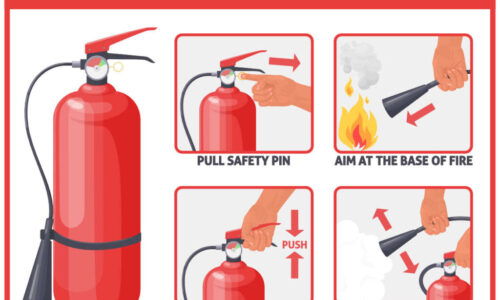
Safely and effectively operate fire extinguishers using the P.A.S.S. technique (Pull, Aim, Squeeze, Sweep).
-
Assess a fire situation and determine when it is safe to fight a fire and when to evacuate.
Detailed Course Syllabus
Session 1: Fire Science & Prevention (2 Hours)
-
Module 1: Fire Theory: The Fire Triangle (Heat, Fuel, Oxygen), stages of fire development.
-
Module 2: Classes of Fire: Detailed study of Class A (Solids), B (Liquids), C (Gases), D (Metals), and K (Cooking Oils).
-
Module 3: Fire Prevention: Common workplace fire hazards, good housekeeping, and control of ignition sources.
Session 2: Extinguishers & Hands-On Response (4 Hours)
-
Module 4: Fire Extinguisher Types: Water, Foam, CO2, Dry Chemical (ABC Powder), Wet Chemical. Understanding their uses and limitations.
-
Module 5: The P.A.S.S. Method: Step-by-step drill on the safe operation technique.
-
Module 6: Live-Fire Practical Training:
This is the core of the course. Under strict supervision, each participant will extinguish:-
A Class A fire (wood/paper) using a water or ABC extinguisher.
-
A Class B fire (flammable liquid) using a CO2 or ABC extinguisher.
(Note: Training uses environmentally safe liquid/gas simulators for safety).
-
-
Module 7: Emergency Response: When to fight vs. when to evacuate, raising the alarm, muster point procedures.
-
Final Assessment: A short written test and a pass/fail practical evaluation on correctly extinguishing a live fire.



Leave a Reply