


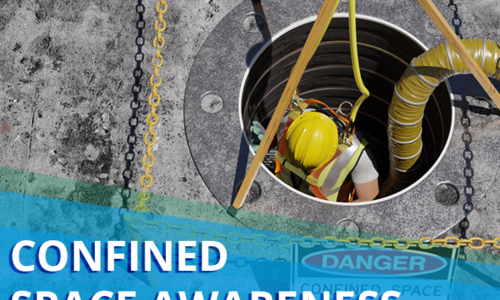
Recognize the Danger. Understand the System. Stay Safe in Confined Spaces.
Confined spaces—like tanks, vessels, silos, and pits—are not designed for continuous occupancy but require periodic entry for work. This course provides vital awareness of the severe hazards (toxic atmosphere, engulfment, entrapment) and the strict safety system, including permits and assigned roles, that must be followed to prevent fatalities.
-
Course Format: Theory-based with practical workshops and scenario discussions.
-
Total Duration: 8 Hours (1 Full Day).
-
Prerequisites: None. Required for anyone who might enter or work near a confined space.
-
Certification: Confined Space Entry Awareness Certificate from Gulf Skill Education System.
What You Will Learn (Course Objectives)
By the end of this course, you will be able to:
-
Identify the key characteristics and examples of a confined space as per safety standards.
-
Recognize the major hazards associated with confined spaces: atmospheric, physical, and psychological.
-
Understand the critical importance of the permit-to-work system for confined space entry.
-
Explain the roles and responsibilities of the Entrant, Attendant, and Entry Supervisor.
-
Describe the basic principles of confined space rescue and why non-entry rescue is preferred.
Detailed Course Syllabus
Session 1: Confined Space Fundamentals & Hazards (4 Hours)
-
Module 1: Definition & Examples: What makes a space “confined”? Common examples in oil & gas, utilities, and construction (storage tanks, pipelines, manholes, boilers).
-
Module 2: Atmospheric Hazards: Oxygen deficiency/enrichment, flammable atmospheres, toxic gases (H2S, CO). Introduction to gas detection requirements.
-
Module 3: Physical & Engulfment Hazards: Mechanical, electrical, thermal hazards. Risks of engulfment by liquids or free-flowing solids (like grain, sand).
Session 2: Safety Systems, Roles & Rescue (4 Hours)
-
Module 4: The Entry Permit System: Understanding a confined space entry permit – its purpose, what information it contains, and who authorizes it.
-
Workshop: Review a sample permit and identify key controls.
-
-
Module 5: Roles & Responsibilities:
-
Entrant: Duties, rights, and required equipment.
-
Attendant (Watch): Critical monitoring duties, communication procedures, and emergency activation.
-
Entry Supervisor: Authorization and verification responsibilities.
-
-
Module 6: Introduction to Rescue: Why planned rescue is mandatory. The hierarchy of rescue: non-entry (mechanical) vs. entry rescue. The dangers of improvised rescue.
-
Final Assessment: A written test and a scenario-based evaluation where participants must identify hazards and required controls for a given confined space work example.



Leave a Reply